Preparing your North Hollywood home for mold season before winter
Mold season in North Hollywood starts with the first winter rains. Here is the fall checklist that keeps moisture out of your walls, attic, and crawl space.
The short answer: preparing your North Hollywood home for mold season before winter California means stopping water before it gets in, keeping indoor humidity under 55 percent, and checking the spots where cold air meets warm interior surfaces. Do those three things in October and November, and you remove the conditions mold needs to start growing when the rains arrive. This guide walks through the exact fall checklist we use on North Hollywood homes, the numbers that matter, and the mistakes that turn a small leak into a five-figure remediation job.
Mold season in North Hollywood is not a summer problem. It is a rain problem, and rain here means December through March. The work you do now, while the ground is still dry and the attic is still accessible, decides how your house handles the wet months.
Why mold season in North Hollywood starts before the rain
Mold season in North Hollywood, California starts in late fall because that is when the conditions inside your walls change, not when the rain actually falls. Mold needs three things: moisture, a food source (drywall paper, wood framing, dust), and temperatures between roughly 60 and 80 degrees Fahrenheit. Your house provides the food and the temperature year-round. The only variable you control is moisture.
Preparing your North Hollywood home for mold season before winter California is a moisture-control project. It is not about spraying anything or buying a special product. It is about finding the water that is already getting in and shutting it off.
North Hollywood sits in the San Fernando Valley, where winter brings two things that matter to your house: rain that arrives in concentrated bursts, and overnight temperatures that drop into the 40s. That combination creates condensation on cold surfaces and pushes water into every gap in the building envelope. A roof that shed water fine in July will not shed it the same way in January.
We see the same pattern every year. Homeowners call us in February with a stain on the ceiling. The leak that caused it started in December. By the time the stain shows, the mold colony behind the drywall has been growing for six to eight weeks.
How do I prepare my North Hollywood home for mold season before winter?
You prepare by walking the house in this order: roof and attic first, then windows and doors, then plumbing, then the crawl space or garage, and finally your indoor humidity. Each step takes 20 to 45 minutes. The whole inspection takes a Saturday morning.
Start at the top. Water always travels down, so the roof is where most winter mold problems begin. Look for missing or lifted shingles, cracked flashing around vents and chimneys, and any daylight showing through the roof deck from inside the attic. If you can see daylight, water can get in.
Then check the attic for dark staining on the roof sheathing, especially on the north-facing slope. That staining is the first sign of condensation, and it is the most common mold issue we find in North Hollywood homes. If you want a second set of eyes on it, our Attic Mold Testing And Removal in NORTH HOLLYWOOD, California service covers the full inspection and the fix.
Next, windows and doors. Run your hand along the interior trim on a cold morning. If you feel dampness or see dark speckling in the corners, the seal has failed. Re-caulk exterior joints and replace worn weatherstripping before the rain starts.
Then plumbing. Check under every sink, behind the washing machine, and around the water heater. A slow drip under a cabinet raises the humidity in that cabinet to 80 percent or higher, which is more than enough for mold. Fix the drip now, not in January.
Finally, the crawl space. If your North Hollywood home has a raised foundation, look for standing water, damp soil, or a musty smell. A crawl space that stays above 60 percent relative humidity will grow mold on the floor joists all winter.
Does mold grow more in winter in North Hollywood, California?
Mold does not grow more in winter in North Hollywood, California because of the cold. It grows more because winter is when water gets into the house and stays there. Indoor mold growth slows when temperatures drop below 60 degrees, but most North Hollywood homes stay between 65 and 75 degrees all winter. That is the ideal range for mold.
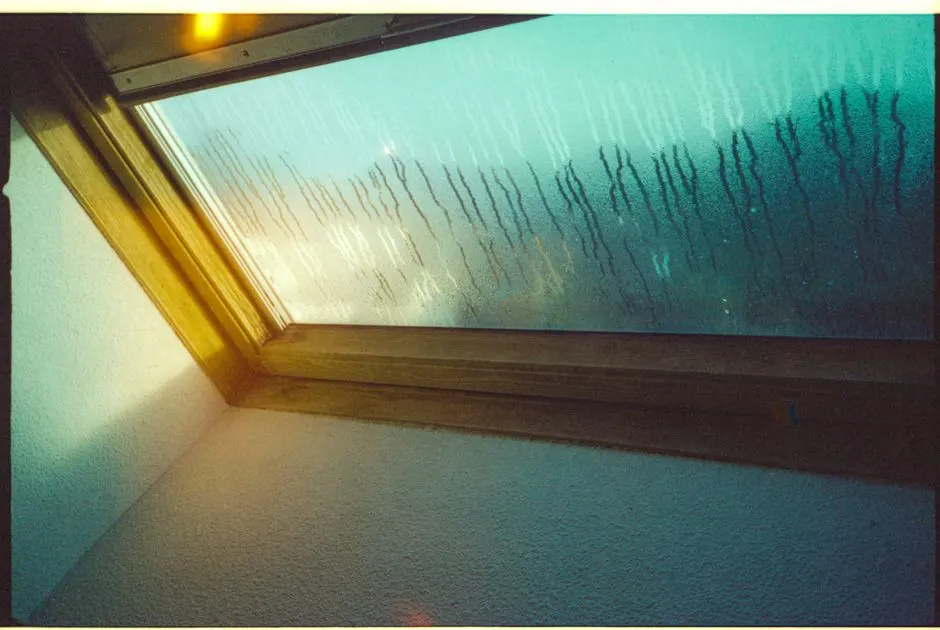
The real winter problem is that moisture has nowhere to go. In summer, open windows and dry air pull moisture out of the house. In winter, you close everything up. A family of four adds roughly 2 to 3 gallons of water vapor to the air every day through cooking, showering, and breathing. In a sealed house, that moisture condenses on the coldest surfaces: window glass, exterior wall corners, and attic sheathing.
That is why we see more mold calls in January and February than in July and August. The mold did not appear overnight. It grew slowly on a surface that stayed damp for weeks.
One more factor specific to North Hollywood: the housing stock. A large share of homes here were built between 1920 and 1960, before modern vapor barriers and insulated windows. Those houses breathe differently than new construction, and they need a different approach to moisture control.
The fall mold prevention checklist for North Hollywood homes
This is the fall mold prevention checklist North Hollywood California homeowners can run in a single morning. Work top to bottom.
- Roof and gutters. Clear leaves and debris from gutters and downspouts. Make sure downspouts discharge at least 4 feet away from the foundation. Water pooling at the foundation is the number one cause of crawl space mold.
- Attic ventilation. Confirm that soffit vents and ridge vents are open and not blocked by insulation. A properly vented attic stays within 10 degrees of outdoor temperature, which prevents condensation.
- Windows and doors. Re-caulk exterior joints and replace weatherstripping. Check for condensation between double-pane glass, which means the seal has failed and the window needs replacement.
- Plumbing. Inspect under every sink, behind the refrigerator, and around the water heater. Fix any drip, no matter how small.
- Crawl space. Check for standing water and damp soil. If the soil is wet in October, it will be wetter in January. A vapor barrier over the soil makes a measurable difference.
- Exhaust fans. Test the bathroom and kitchen exhaust fans by holding a tissue against the grille. If the tissue does not stick, the fan is not pulling air. Clean or replace it.
- Indoor humidity. Buy a $15 hygrometer and place it in the main living area. Keep indoor relative humidity between 30 and 50 percent.
If you would rather have a professional run this list and document what they find, a Home Mold Inspection in NORTH HOLLYWOOD, California gives you a written report with photos and moisture readings room by room.
Winter moisture control in North Hollywood: the numbers that matter
Winter moisture control in North Hollywood California comes down to a handful of numbers. Hit these and you have removed the conditions mold needs.
- Indoor relative humidity: 30 to 50 percent. Above 55 percent, mold growth accelerates. Above 60 percent, you will see condensation on windows.
- Crawl space humidity: below 60 percent. Above that, floor joists stay damp all winter.
- Attic temperature: within 10 degrees of outdoor air. If your attic is 20 degrees warmer than outside in January, you have a ventilation problem.
- Bathroom fan runtime: 15 to 20 minutes after every shower. A fan that runs 5 minutes leaves moisture in the air.
- Downspout discharge distance: at least 4 feet from the foundation.
- Roof leak response time: 24 to 48 hours. Mold can begin growing on wet drywall in as little as 24 hours.
If you cannot get indoor humidity below 55 percent with ventilation alone, a standalone dehumidifier sized for 1,000 to 1,500 square feet will do it. Run it in the most humid room, usually the bathroom or the room above the crawl space.
One more number worth knowing: a small roof leak that soaks a 4-by-4-foot section of drywall and insulation typically costs $400 to $900 to dry out and repair if you catch it in the first week. If mold establishes itself, remediation for that same area runs $1,500 to $3,500 in 2026 pricing. Catching it early is the whole game.
Mold season preparation for older homes in North Hollywood
Mold season preparation for older homes in North Hollywood requires more attention than new construction because older houses were built with different materials and different assumptions about how water moves. Homes built before 1960 often have no vapor barrier under the floor, single-pane windows, and original cast-iron or galvanized plumbing that is at the end of its life.
If your home was built in that era, add these steps to the checklist:
- Check the cast-iron drain lines under the house for cracks and rust-through. A slow drain leak under a raised foundation is one of the most common sources of crawl space mold we find.
- Look at the original window frames for rot. Wood rot holds water against the framing and feeds mold directly.
- Inspect the attic for old roof repairs. Layered shingles and patched flashing are common in this housing stock and often leak in the first heavy rain.
If you find mold under the house, Crawl Space Mold Removal in NORTH HOLLYWOOD, California addresses the growth and the moisture source together. Removing the mold without fixing the water is a temporary fix.
Common mistakes we see every fall
The most common mistake is waiting for a visible sign before doing anything. By the time you see a stain or smell a musty odor, the mold has been growing for weeks. Prevention work happens before the problem is visible.
Other mistakes we see on North Hollywood homes every fall:
- Painting over a water stain. Paint does not stop mold. It hides the evidence while the colony keeps growing behind it.
- Running the bathroom fan for 5 minutes. That is not enough. Run it 15 to 20 minutes after every shower, and leave the door open afterward.
- Ignoring a small drip. A drip that fills a cup a day adds up to 30 cups a month inside your cabinet. That is enough to grow mold on the cabinet base.
- Closing off unused rooms. A closed bedroom with no air circulation becomes the coldest, dampest room in the house. Leave doors open or run the HVAC fan.
- Blocking attic vents with insulation. This traps moisture in the attic all winter and leads to sheathing mold by spring.
- Using a humidifier in winter. North Hollywood winters are already humid enough indoors. Adding moisture makes the problem worse.
One mistake that costs homeowners the most: assuming a small amount of visible mold is a cleaning problem. If the mold is on drywall, baseboard, or wood, the moisture source is behind it. Cleaning the surface does nothing.
When to call a professional
Call a professional when you find mold larger than about 10 square feet, when you smell a musty odor but cannot find the source, or when you have had any water intrusion in the past 12 months. Those three situations almost always mean there is hidden growth behind a wall or under a floor.
We handle this every day. Mold Remediation Service North Hollywood inspects the house, finds the moisture source, removes the mold, and verifies the work with clearance testing. If you are not sure whether you have a problem, a Mold Inspection Near Me in NORTH HOLLYWOOD, California is the fastest way to get a straight answer.
If you are dealing with a known contamination, our Mold Remediation Company in NORTH HOLLYWOOD, California team handles everything from containment to final clearance. We also work directly with homeowners who just want a second opinion before they spend money on repairs.
Frequently Asked Questions
How do I prepare my North Hollywood home for mold season before winter?
Fix every water leak, clear your gutters, confirm your attic is vented, and keep indoor humidity between 30 and 50 percent. Run this checklist in October or November, before the first rain. The whole process takes one morning and prevents the conditions mold needs to grow.
Does mold grow more in winter in North Hollywood, California?
Yes, but not because of the cold. Mold grows more in winter because houses are sealed up, rain gets in, and indoor moisture has nowhere to escape. Most North Hollywood homes stay between 65 and 75 degrees all winter, which is the ideal temperature range for mold growth.
What are the best mold prevention tips for winter in North Hollywood?
Keep indoor humidity under 50 percent, run bathroom fans for 15 to 20 minutes after showers, fix drips within 24 hours, and check the attic for condensation staining. The single highest-value step is finding and stopping water intrusion before the first rain.
Should I get a mold inspection before winter in North Hollywood, California?
Yes, if your home has had any water intrusion in the past year, if you smell a musty odor, or if your home was built before 1960. A pre-winter inspection takes 60 to 90 minutes and gives you a documented baseline before the wet season starts.
How can I prevent mold after winter rains in North Hollywood?
Check the attic, crawl space, and any room with exterior walls within 48 hours of a heavy rain. Look for damp drywall, dark staining, or a musty smell. If you find moisture, dry the area within 24 to 48 hours, before mold has time to establish.
Get help with Mold Remediation Service in NORTH HOLLYWOOD
If you want your North Hollywood home inspected before the winter rains start, our team can walk the property, document moisture readings, and tell you exactly what needs fixing. We handle inspection, testing, and full remediation under one roof.
Call Mold Remediation Service North Hollywood at (833) 929-5837 to schedule a pre-winter mold inspection. We serve homeowners across North Hollywood and the surrounding San Fernando Valley.